

Studies show that about 80% of small businesses fail because they don’t manage their cash flow well. Your financial planning can have dangerous gaps if you overlook regular costs like subscriptions, insurance premiums, or utilities. Poor cash flow management causes most business failures, which shows why mastering money movement through your company matters. The company negotiated longer payment terms with key suppliers, easing monthly cash outflow pressures.
Common Mistakes Business Owners Make
- Using software to perform financial analysis empowers you to generate rolling forecasts and take a more agile approach to your money management because it gives you real-time data.
- It’s the opposite of cash outflow, which is the money leaving the business.
- Marketers must determine the assortment of products they are going to offer consumers.
- At the heart of NPV lies the bedrock principle of the time value of money.
- Additionally, focus on negotiating favorable payment terms to retain cash for longer in the business.
- To estimate the cash inflows of a project, one needs to forecast the sales volume, the selling price, and the operating expenses of the project, and apply the relevant tax rules.
Tracking exchange netflows helps traders assess market sentiment and potential price movements, offering insights for strategic decisions like buying, selling or hodling. FDI netinflows are the value of inward direct investment made by non-residentinvestors in the reporting economy. FDI net outflows are the value of outwarddirect investment made by the residents of the reporting economy to https://www.bookstime.com/ externaleconomies. When a company incurs an expense or makes a payment, it results in a decrease in the cash account, which is debited.
Research Data

Note that if your business lost money due to an investment, then the investment amount will be written as a negative. For instance, if in the above example, SunRays lost $5,000 then the net cash flow would be $350,000 + $50,000 – $5000 which would equate to a net cash flow value of $400,000. In real life, cash flow calculations are much more complex because adjustments need to be made. For instance, income statement calculations are prepared on an accrual basis and so the amounts cannot be directly used to calculate cash flow. Your cash flow statement will outline your cash inflow vs outflow and how they compare.
Forgot an Estimated Tax Payment? Here’s How to Get Back on Track
Companies that consistently finance operations through debt due to negative cash flow may find themselves with unsustainable levels of debt. Consider a retailer that borrows to finance a rapid expansion without a proportional increase in sales, potentially leading to solvency issues. Recent banking failures and economic shifts have significantly impacted startup cash flow management. As the economic environment becomes more challenging, venture capitalists (VCs) have become more cautious, focusing on startups with sound economics and realistic growth trajectories.

The movement of all your cash—in and out—is recorded in detail on the cash flow statement in your financial reporting. This includes all the revenue and other types of income that your business generates. Consider different scenarios that could affect your cash cash inflow vs outflow flow, such as changes in market conditions or unexpected expenses. This can include negotiating better prices with suppliers, reducing inventory levels, or using technology to automate processes. By following these tips, you can improve your cash flow and ensure the long-term success of your business.
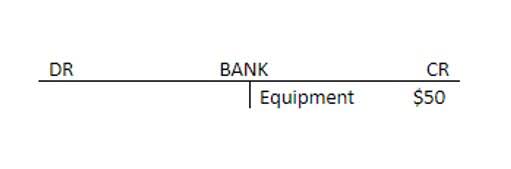
For example, when a company extends a loan to a creditworthy debtor, it becomes an asset for the company, serving as an exception to the rule. Profits can be generalized as the difference between the cash inflow and outflow. If the company wants to make profits, inflow should be more significant than outflow. Therefore, a company will seek to increase the former and decrease the latter (exceptions exist). Cash outflow can indicate a crunch in the business’s cash flow, implying that the business does not have enough cash for expansion and growth. This can include revenue from sales, interest on investments, and any other money that the business receives.
Best AI Tools for Your Business in 2026
- The cash outflow principle also uses the timing as a deciding factor for your profit calculation.
- Cash inflow and outflow are essential metrics for understanding a business’s financial health, involving money entering and leaving the company.
- Both NPV and IRR measure the profitability and attractiveness of a project.
- To name just one example, negative cash flow in investing activities often shows strategic investments for future growth.
- Understanding these factors can help you manage your finances more proactively and avoid cash crunches.
Understanding how inflows and outflows affect crypto prices is crucial for navigating market dynamics. Inflows, representing the influx of liquidity Bookstime into exchanges, can positively impact prices. Conversely, outflows, indicating the withdrawal of funds, can exert downward pressure on prices.
Why maintain positive cash flow in your business?
- Operating cash flow can be positive or negative, depending on whether a company is generating more cash from its operations than it is spending.
- This can help you make better decisions about spending, investments, and financing.
- Cash inflow refers to money coming into a business from various sources like sales, investments, or loans.
- Companies receive cash inflows by selling long-term assets, marketable securities, or businesses.
- Offering online payment forms like debit and credit cards and accepting same-day transactions ensures financial efficiency.
- Understanding exchange dynamics is key to making informed trading decisions.
When you have more cash entering your business than leaving it, this is known as positive cash flow. Keeping all payments linked to business credit cards and bank accounts (rather than using a personal card) will make it easier to determine your total cash outflows. Cash outflow includes all payments or activities that result in funds moving out of your business. Basically, any money that you spend to keep your business running qualifies as a cash outflow.

Comentarios recientes